


Ethics, Disabilities and Chronic Illnesses: Perspectives in Dialogue
On 15 and 16 October 2026, the workshop ‘Ethics, Disabilities and Chronic Illnesses: Perspectives in Dialogue’ took place at the University of Graz. It was organised by the ‘Ethics, Disability and Chronic Illness’ working group of the Academy for Ethics in Medicine (AEM) in cooperation with CIRAC. Researchers, practitioners and representatives of self-advocacy organisations discussed current ethical issues relating to disability and chronic illness.
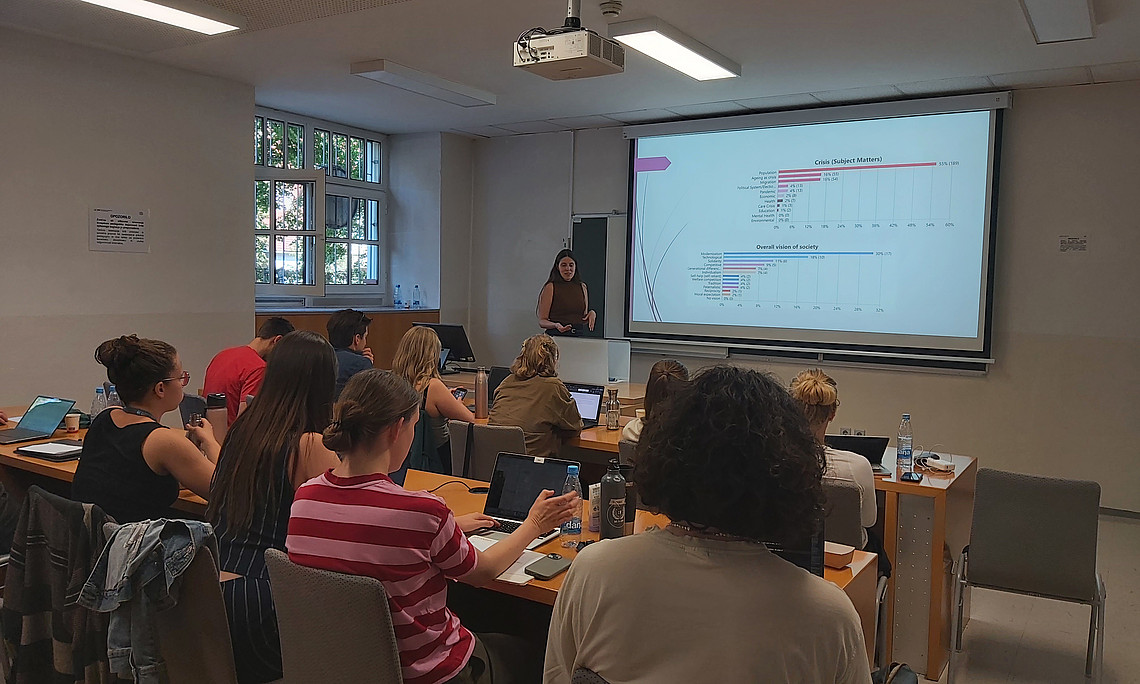
Dr Nina De Bettin Padolin (CIRAC) opened the event with a presentation on the visibility and representation of ageing and disability from a cultural studies perspective. Various topics were then explored in greater depth in two parallel small groups: Prof. Dr Vivienne Matthies-Boon (Radboud University Nijmegen) addressed post-infection ethics and chronic illnesses, whilst Prof. Dr Giovanni Rubeis (University of Graz) discussed techno-ableism and the ethical challenges posed by technological developments in the healthcare sector. Dr Anna-Eva Nebowsky (Ruhr University Bochum) addressed, in the online group, medical-ethical aspects of partnership and intimacy in the context of disability and chronic illness.
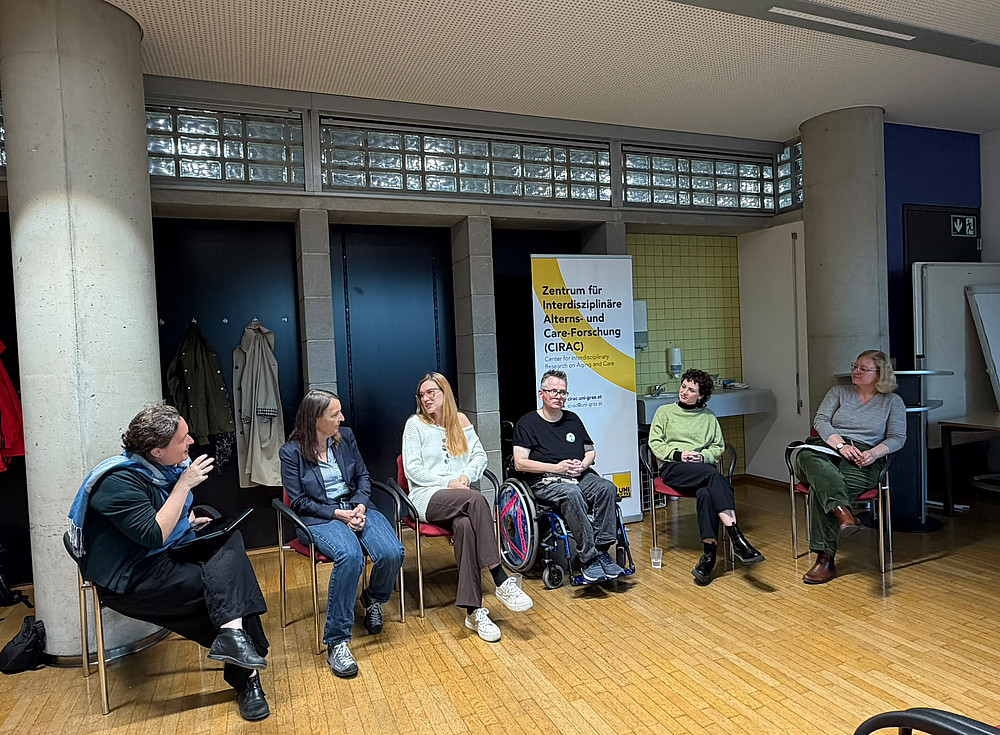
On the first day, a public panel discussion entitled ‘Nothing about us without us? Experiences with co-research in medical ethics’ also took place. On the panel, Prof. Dr Sigrid Graumann, Antonia Kranzelbinder, Mag. Marianne Karner and Dr Alekszandra Rokvity (CIRAC) discussed the possibilities and limitations of participatory research.
On the second day, Prof. Dr Sigrid Graumann (Evangelische Hochschule Rheinland-Westfalen-Lippe) spoke about human rights-based ethical perspectives on the relationship between medicine and disability. In the concluding forum, key findings from the workshop were revisited and opportunities for future research and collaboration were discussed.
The workshop made it clear that participation, inclusion and involvement are key challenges in medical ethics. During the discussions, it was unanimously agreed that questions of medical ethics cannot be considered solely at an individual level, but must take into account social, political and structural contexts. The participants emphasised the need for ongoing dialogue between academia, practice and those affected, as well as the importance of participatory and interdisciplinary approaches to research and healthcare.
The workshop was funded by the Academy for Ethics in Medicine (AEM) and CIRAC. The organising team consisted of Dr Anna-Christina Kainradl, Dr Elisabeth Langmann, Dr Maximiliane Hädicke, Majse Kraft MA and PD Dr Merle Weßel.